
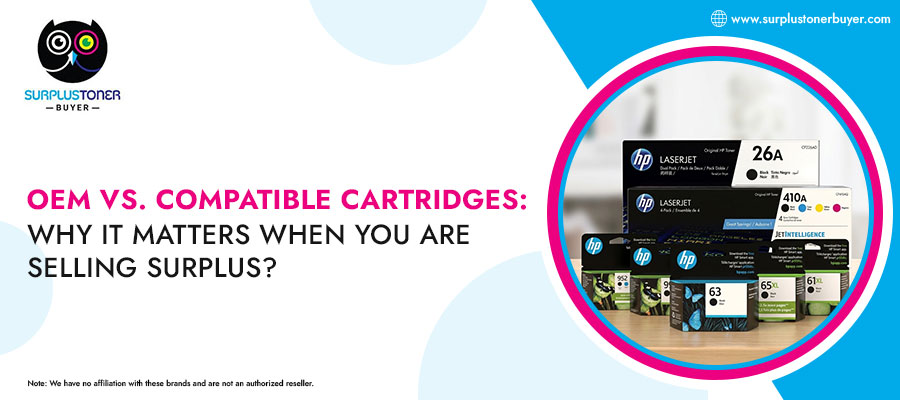
If your organization has surplus printer supplies and you are considering selling them, one of the most important things to understand upfront is the difference between OEM Cartridges vs compatible cartidges. OEM Cartidges means made by Original Equipment Manufacturer cartridges, whereas, compatible ones are also called third-party or aftermarket cartridges. This distinction has a significant impact on resale value: and it is one of the most common sources of confusion we encounter at Surplus Toner Buyer.
The short version: genuine OEM supplies hold meaningful resale value. Compatible supplies have little to none. Understanding why will save you time and help you set accurate expectations before you submit your inventory.
What Is an OEM Cartridge?
An OEM cartridge is manufactured by the same company that made your printer. When you buy an HP toner cartridge from HP, a Canon cartridge from Canon, or a Xerox toner from Xerox, you are buying an OEM product. These cartridges are designed and quality-controlled to work specifically with the printer brand and model for which they are made.
OEM cartridges are sold under the printer manufacturer’s own brand and part number system. They come with the manufacturer’s quality guarantee and are typically marked with authentication features like hologram stickers and unique part numbers.
What Is a Compatible Cartridge?
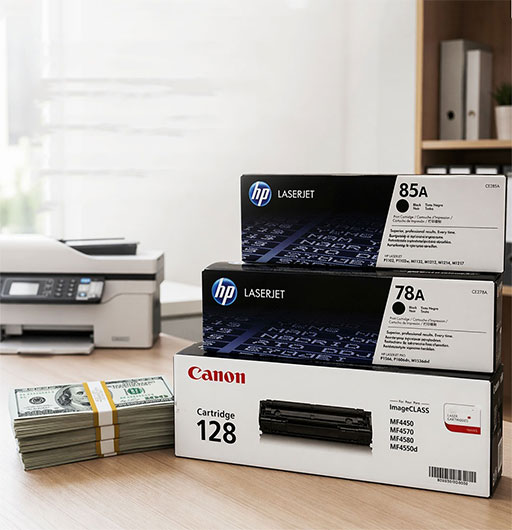
A compatible cartridge: also called a third-party, aftermarket, or remanufactured cartridge: is made by a company other than the original printer manufacturer. Compatible cartridges are designed to function in OEM printers but are not produced by the OEM.
Compatible cartridges are legal to manufacture and sell, and they are often priced significantly below OEM equivalents. Many businesses use them to reduce print costs. However, their lack of OEM branding and quality verification has a profound effect on their secondary market value.
Why Compatible Cartridges Have Little to No Resale Value?
The secondary market for surplus imaging supplies is driven by buyers who want to purchase genuine OEM products below retail price. Those buyers: businesses, resellers, and dealers who buy surplus: are specifically seeking OEM authenticity. A compatible cartridge, regardless of how well it functions, cannot offer what the OEM brand provides:
- Verified OEM authentication and branding
- Manufacturer quality standards and consistency
- The demand-driven price support that comes with OEM brand recognition
- Acceptance by corporate and government buyers who require OEM-only procurement
Because compatible cartridges lack these qualities, there is essentially no functioning secondary market for them. This is true even for high-quality, name-brand compatible products.
How to Tell If Your Cartridges Are OEM?
When reviewing your surplus inventory, here is how to distinguish OEM from compatible products:
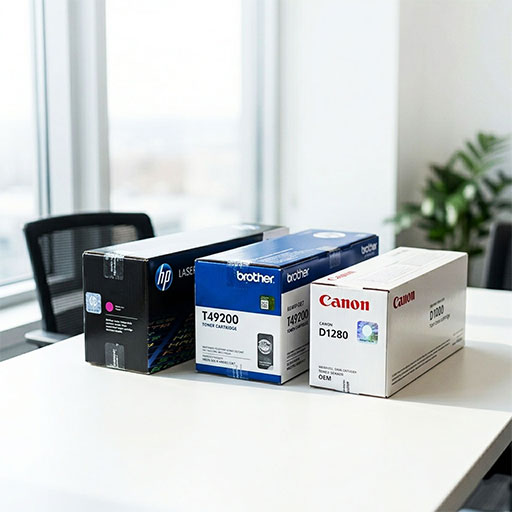
- Brand name on the box should match the printer manufacturer (HP on HP supplies, Canon on Canon supplies, etc.)
- OEM part numbers follow manufacturer-specific formats: HP part numbers often begin with letters like CF, CE, or CC followed by numbers
- OEM products typically have hologram authentication stickers: though these may be damaged in surplus inventory
- Look for “Original” or “Genuine” language on the packaging
- Avoid confusion with labels like “Works with HP” or “Compatible with Canon”: these indicate third-party products
What to Do If You Have a Mix of OEM and Compatible Supplies?
Many organizations discover that their surplus inventory is a mix of genuine OEM and compatible products: often because purchasing decisions were made by different people over different budget periods. This is entirely normal.
When you submit your inventory to Surplus Toner Buyer, simply list everything you have. Our team will identify which items qualify as purchasable OEM products and provide a purchase offer based on those items. There is no obligation, and we will be straightforward with you about which items we can purchase and which we cannot.
Brand Recognition Within OEM Products Also Affects Value
Even within the OEM category, not all brands are equal in terms of resale demand. HP, Canon, Lexmark, Xerox, and Dell are consistently the highest-demand brands in the secondary market, reflecting their dominance in active business environments. Supplies from these brands sell faster and often command better prices than supplies from less common OEM brands.
That said, we purchase supplies from virtually all major OEM manufacturers. Submit your full list and our team will evaluate every item.
The Takeaway
If you are holding surplus printer supplies and wondering whether they have resale value, start by confirming whether your items are genuine OEM products. That single distinction determines whether your surplus is a cash recovery opportunity or a disposal challenge, so always do OEM Cartridges vs compatible cartidges comparison. Surplus Toner Buyer purchases genuine OEM imaging supplies across all major brands. Submit your inventory list and find out what your supplies are worth.